Hadrian's Wall has a reputation problem. Say the words and most people picture a long drive west, a full day on the moors, and boots that never quite dry out. The truth is friendlier. The wall begins inside Newcastle's boundary at Wallsend, and the best of its central stretch sits within an hour of Central Station on the Tyne Valley Line. You can stand on a Roman rampart in the morning and be back in the city for a late lunch.
Built from AD 122 on the orders of the Emperor Hadrian, the wall ran 73 miles from the Tyne to the Solway Firth, marking the north-western edge of the Roman Empire. It is now a UNESCO World Heritage Site and a National Trail, walked end to end by thousands of people each year. You do not need to join them. Half a day is enough to get a proper look at the stonework, the landscape and the odd, brilliant fact that this was once the edge of the known world.
What follows is a short list of the easiest, most rewarding outings from the city, ordered from simplest to most ambitious. None of them requires a car, a full day or any genuine fitness. All of them will give you a piece of the frontier.
What You Are Actually Looking At
Before you go, it is worth knowing what survives. The wall was not a single clean line built to one plan. It was begun as a broad stone wall, roughly three metres thick, then partly rebuilt to a narrower gauge when the legions were pulled south to campaign in Scotland. Some of the western stretch was originally turf, a rampart of stacked sods held together by timber, and none of that turf has survived above ground.
The repeating rhythm of the thing is what makes it legible. Milecastles — small, fortified gateways — sat at every Roman mile, and two turrets stood between each pair. Behind the wall ran the Vallum, a flat-bottomed ditch with mounds on either side, which seems to have controlled movement rather than blocked it. Where you see a big, sprawling ruin, you are usually standing in a fort.
The Historia Augusta, written long after the fact, claims Hadrian built the wall "to separate the Romans from the barbarians". Archaeologists have been arguing about that sentence ever since.
Keep an eye out for these features as you walk:
- Milecastle — a small fortlet with gates on either side, used for patrols and checkpoints.
- Turret — a two-storey lookout, usually visible now as a square hollow in the line of the wall.
- Fort — the big installations at Wallsend, Chesters, Housesteads and Birdoswald, home to hundreds of soldiers.
- Vallum — the earthwork to the south, easiest to see near Heddon and at Walltown Crags.
- Ditch — the defensive cut on the northern side, often the clearest sign of the wall's route.
A Wall That Begins at a Metro Station
Segedunum, at Wallsend, is where the wall meets the Tyne and where the National Trail begins. Take the Metro to Wallsend — around twenty minutes from Monument — and you are a short walk from the fort itself. The site has the footings of the fort laid out in stone, a reconstructed bath house and a viewing tower that makes sense of the whole plan once you are up it. Opening hours have been trimmed in recent years, so check before you travel.
The fort sits a few minutes from the river, and the path along the bank makes a decent add-on. Head west towards Walker and Byker if you want a longer leg, or simply loop back to the Metro. It is more industrial heritage than Roman, but the river carries it. Two hours, no hills, no planning. The easiest possible introduction to the frontier.
Be honest about what this is, though. At Wallsend you are looking at foundations, labels and a reconstruction. It is the right place to start, not the best place to stop.
Heddon-on-the-Wall: The Nearest Proper Wall
Nine miles west of the city centre, Heddon-on-the-Wall holds the best surviving piece of the wall within Tyneside: a long, chunky band of the original broad wall in a field behind St Andrew's Church, with the ditch still traceable alongside it. Buses run from Newcastle out along the old road through Throckley and Newburn. Timetables shift, so check the current service the day before.
A loop of two to three miles takes you from the village centre to the wall field and back by the old military road, with a pub at either end of the walk. It is the shortest trip that gives you real Roman stonework rather than a museum reconstruction, and it works in almost any weather. The gate into the field gets muddy, so leave the white trainers at home.
The nice detail here is the scale. This section is roughly three metres thick, far chunkier than the narrow wall you will meet further west, because it belongs to the first phase of construction. Run a hand along it and you are touching stone that was quarried, carted and laid within a few years of AD 122. There is no interpretation board that improves on that.
Corbridge: The Supply Town That Came First
About thirty-five minutes by train from Newcastle, Corbridge is the easiest half day on this list. The Roman town of Coria sits a twenty-minute walk from the station, and it is a substantial one: granaries, a courtyard building, a fountain base and a small museum holding the Corbridge Lion. Corbridge mattered before the wall existed — it belonged to the Stanegate, the earlier line of control that ran east to west. The wall came later, a few miles north. Think of Corbridge as the warehouse and the wall as the fence.
Pair the site with the village: the bridge over the Tyne, the seventh-century church, the old vicar's pele tower and a handful of good cafés within a few minutes of each other. It is a gentle, civilised sort of day out, and it is the one to choose if the weather turns or if you have reluctant walkers in the group. Give it three or four hours and you will have seen more Roman masonry than most visitors manage in a week.
Practicalities: Trains, Tickets and Timing
The Tyne Valley Line runs from Newcastle through Corbridge, Hexham and on towards Carlisle, which means the central wall is genuinely reachable by public transport. A few things worth sorting in advance:
- Check the day of travel. Sunday services are thinner, and some Hadrian's Wall bus connections are seasonal, running mainly from spring to early autumn.
- Buy a return. Off-peak returns to Hexham or Corbridge are cheap and save queueing at a machine you may not find on the way back.
- Work backwards from the train. Pick your return service first, then decide how far you can walk. Missing the last bus back from a crag is a genuinely long walk.
- Carry cash or a card that works. Village pubs and cafés are reliable, but some rural stops are less so.
When to Go and What to Wear
The wall is a working landscape, not a theme park, and the weather reflects that. The walking is rarely steep from Newcastle, but the ground is often wet, and the wind across open fields is the thing people underestimate.
- Spring and early autumn are the sweet spots: longer days, drier ground and everything open.
- Summer brings the crowds to Housesteads and Vindolanda, but the quieter sections stay quiet.
- Winter is atmospheric and often empty, but daylight is short and some sites close entirely.
- Footwear matters more than anything else. Waterproof boots with grip beat trainers every time.
- Layers, a waterproof and a paper map are still sensible, even on a two-mile loop.
Start small, then let the wall pull you west. Almost everyone who walks a mile of it ends up planning a longer trip.
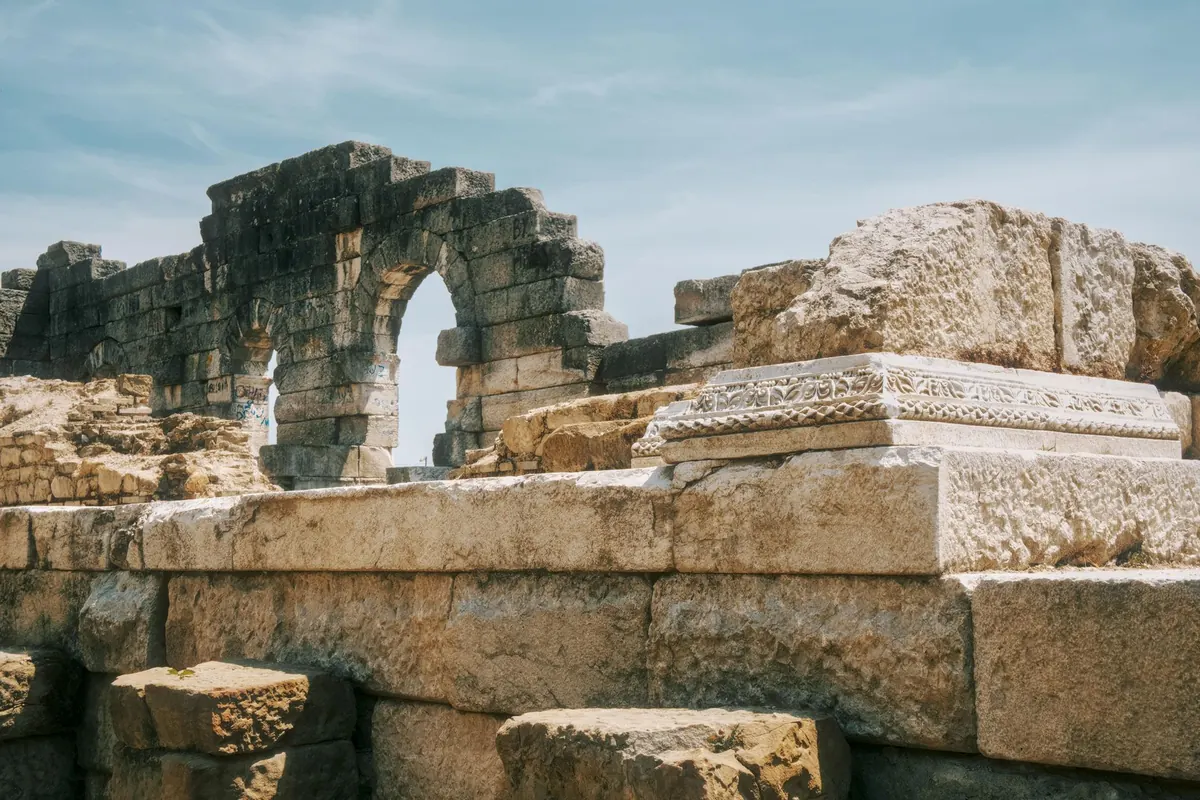
Photo: Abdullah Öğük / Pexels